/01 Why Reconciliation Exists
One transaction. Multiple versions of the truth.
When a customer makes a payment, merchants, payment providers, and banks each record their own version of the same transaction.
→
PSP (Adyen)
Provider settles it
→
As transaction volumes grow, even small discrepancies become difficult to investigate at scale, so reconciliation solves this by comparing each system against another and verifying that every version tells the same story about where the money went.
Layer 1
⇄
PSP (Adyen)
What Adyen settled
→
Match or Exception
If they agree → matched ✓
Layer 2
PSP (Adyen)
What Adyen sent
⇄
→
Match or Exception
If they agree → matched ✓
Accounts are paired using a common identifier, such as an Order ID or Batch ID, and validated against a predefined rule set. Depending on how the transaction flows through each system, a single transaction may span multiple accounts and many underlying entries.
/03 Why Resolution Slows Down
One mismatch can hide many different stories.
The mismatch type only tells part of the story. Understanding how accounts and entries are connected is what determines how it's resolved.
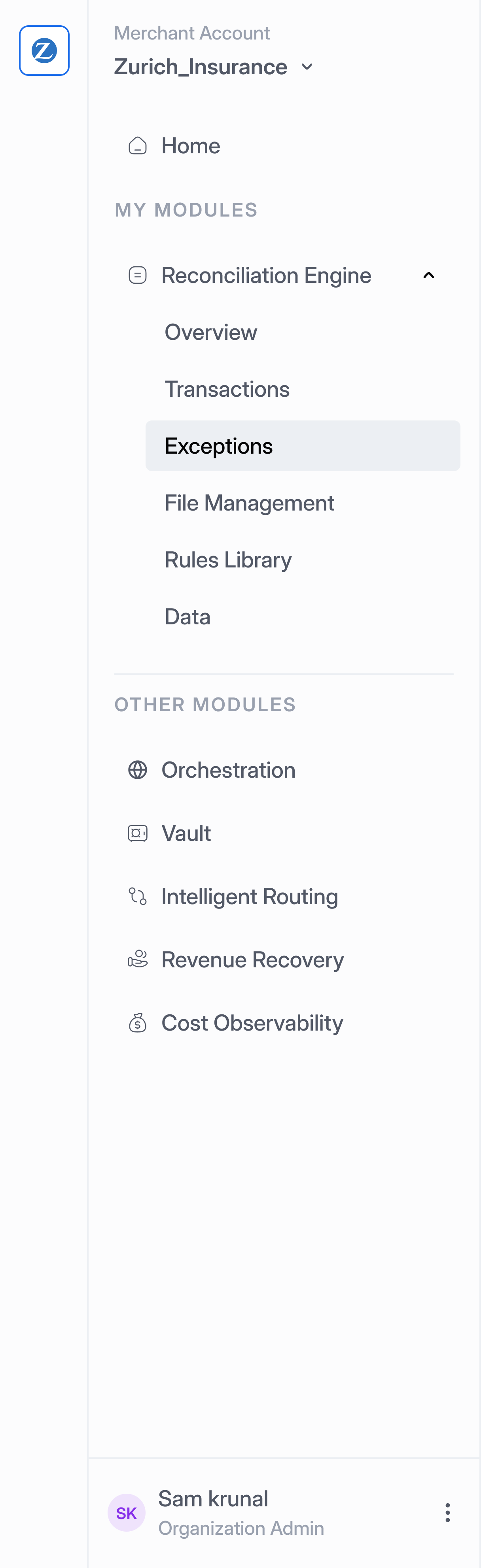
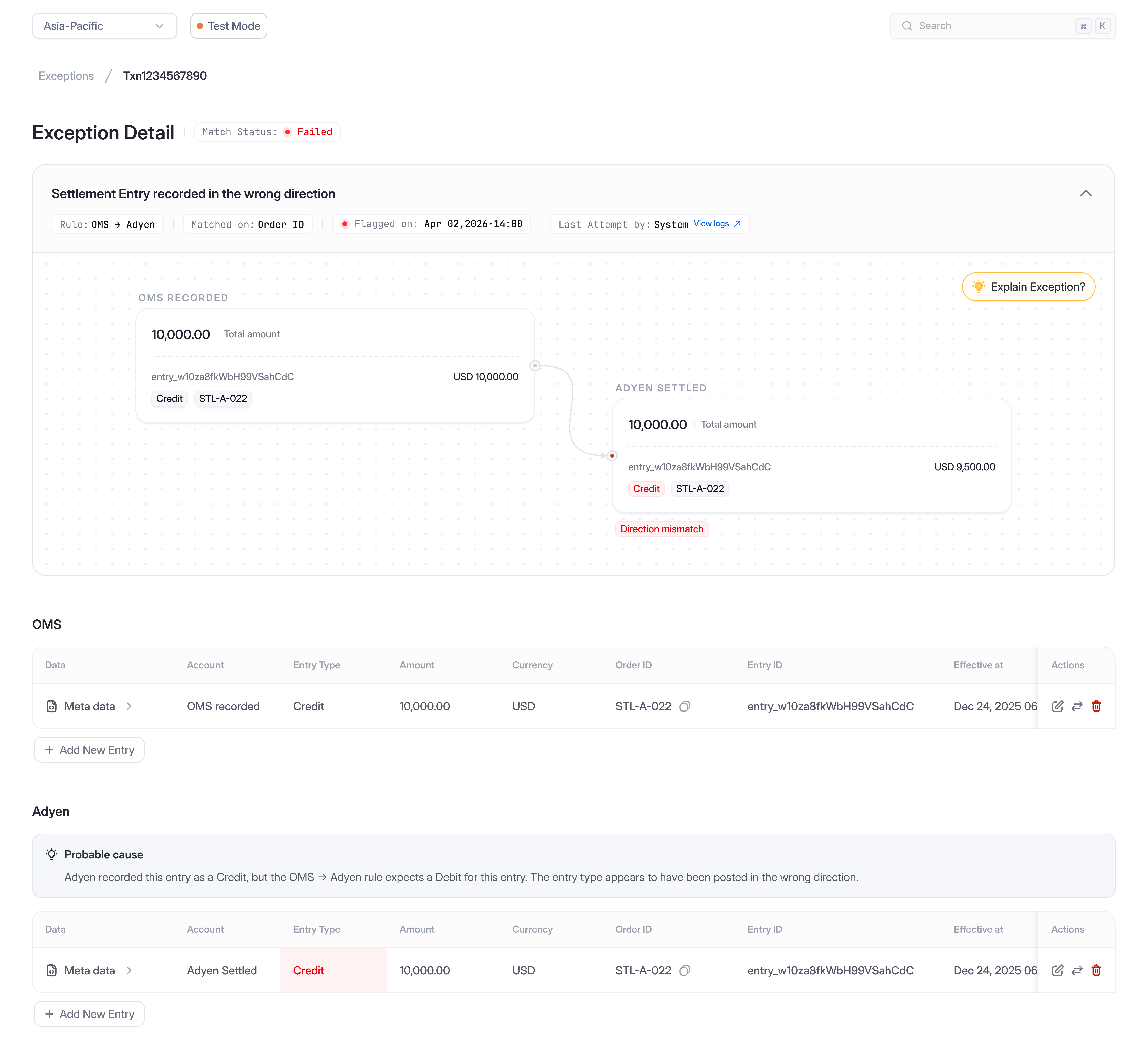
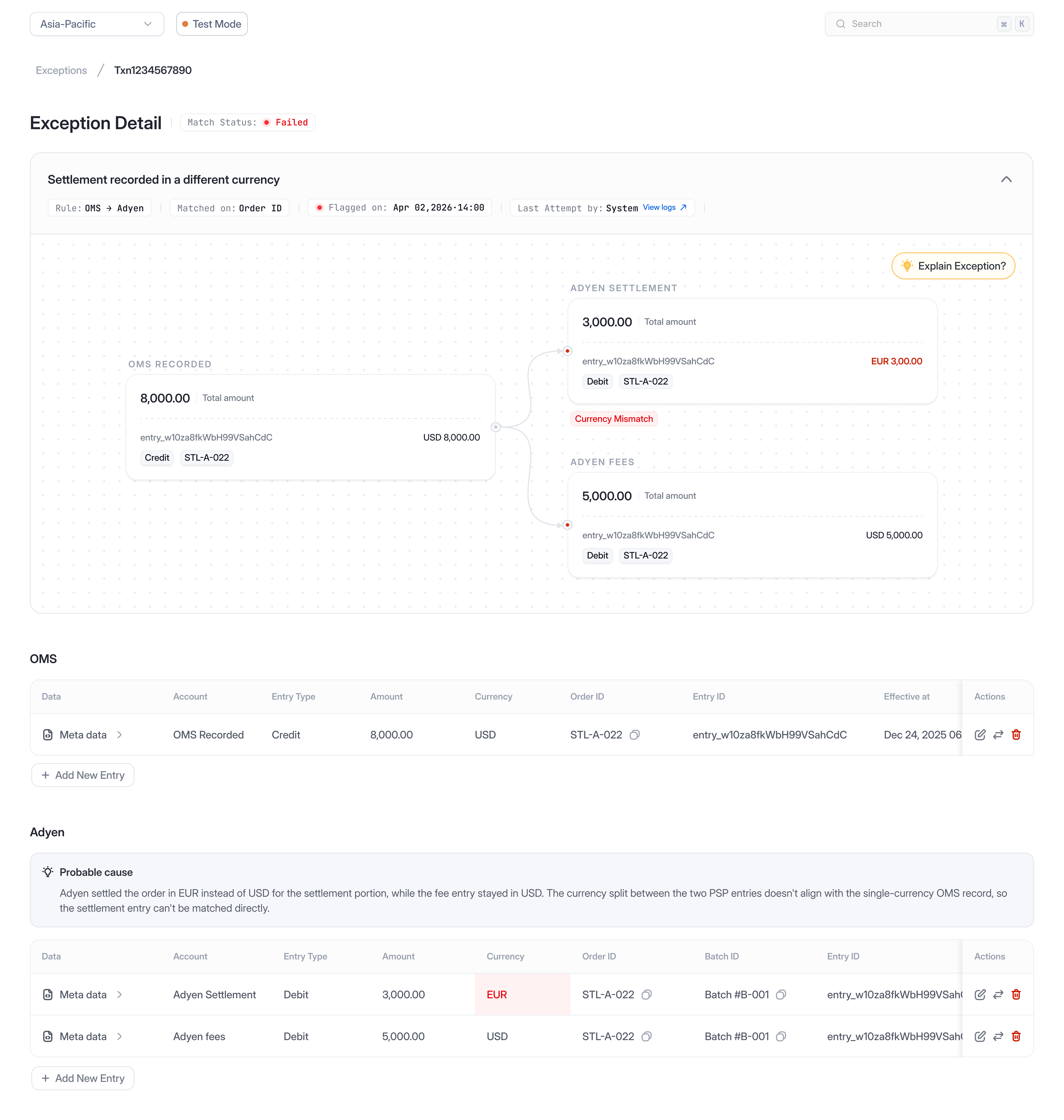
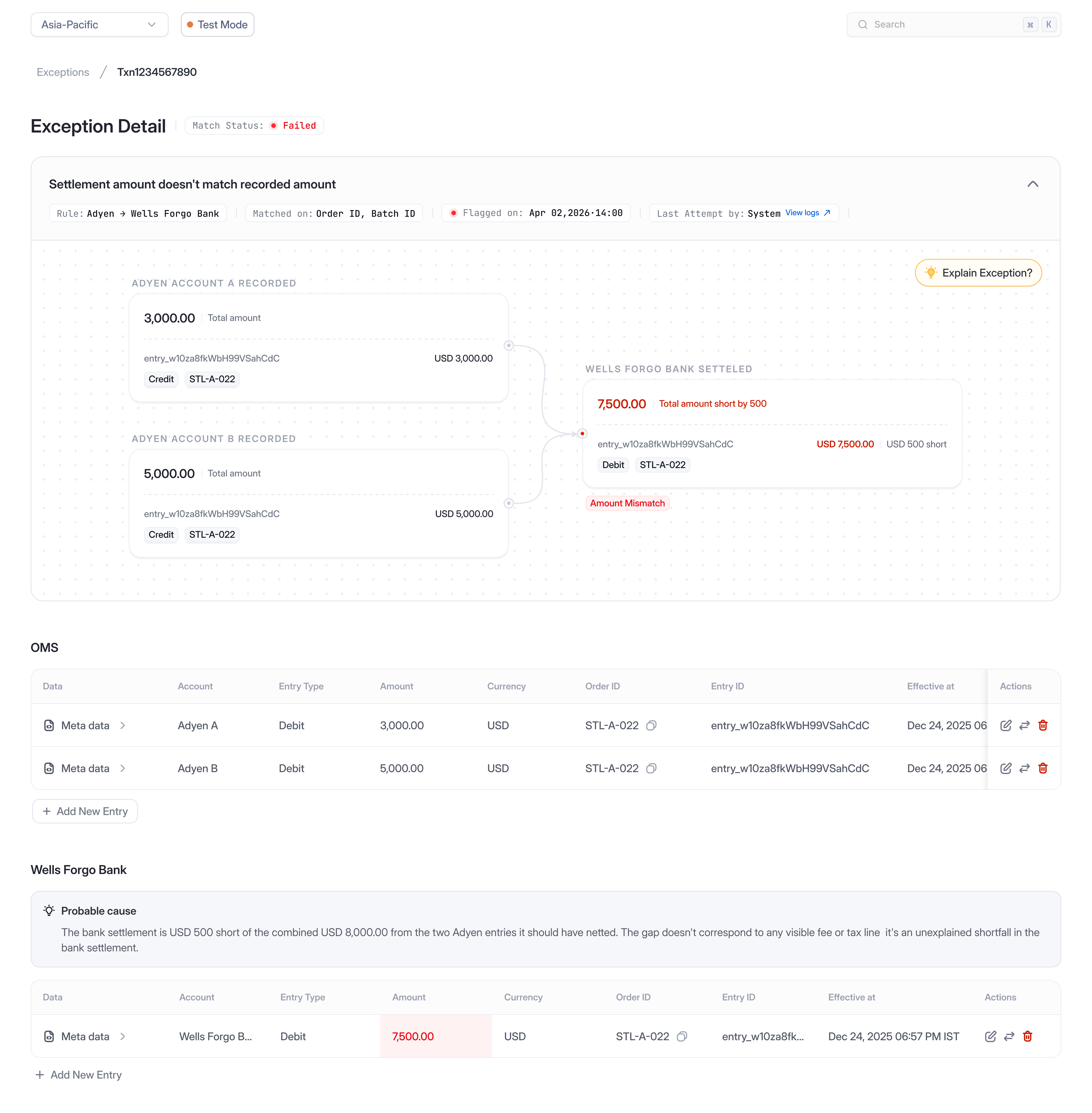
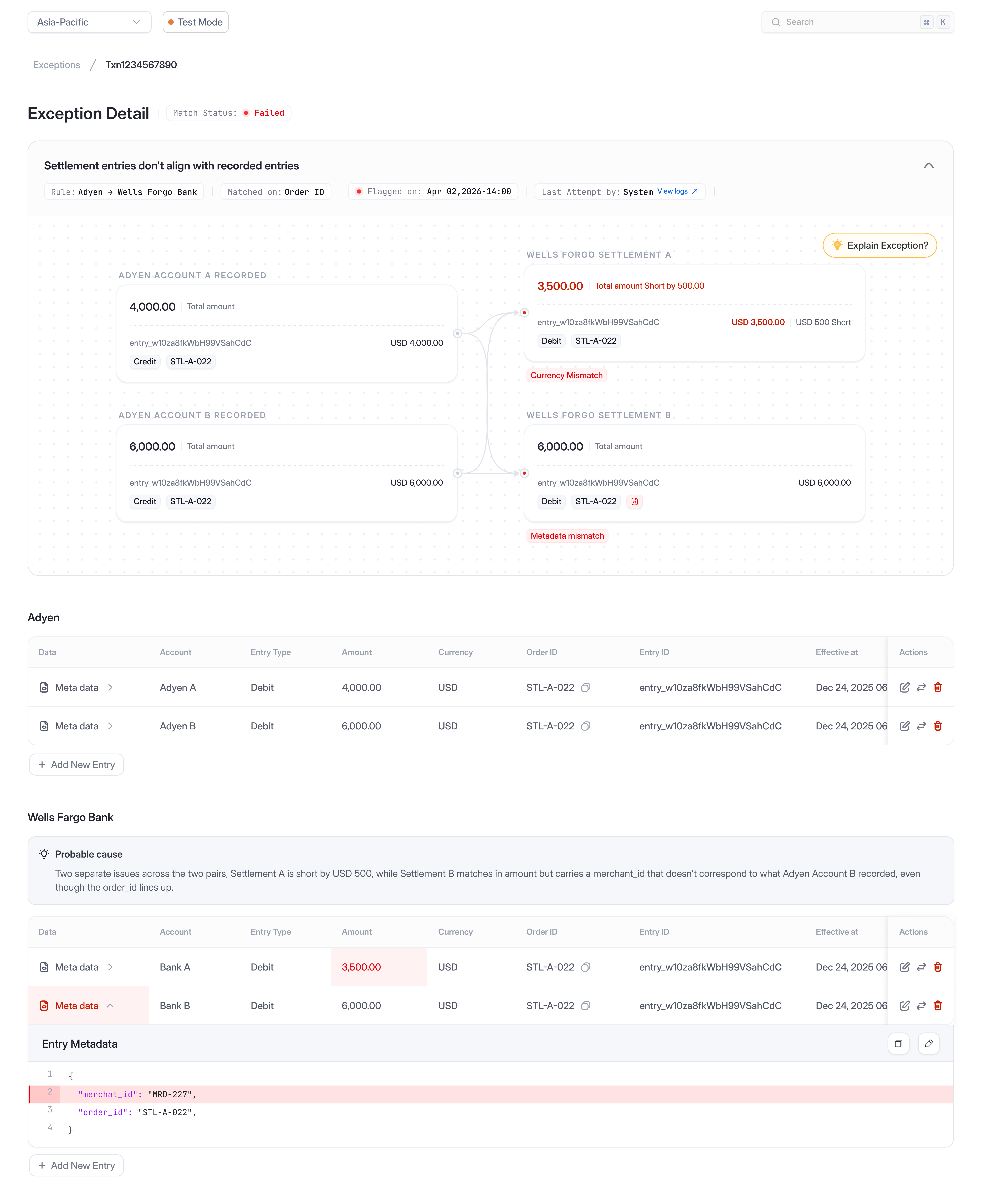
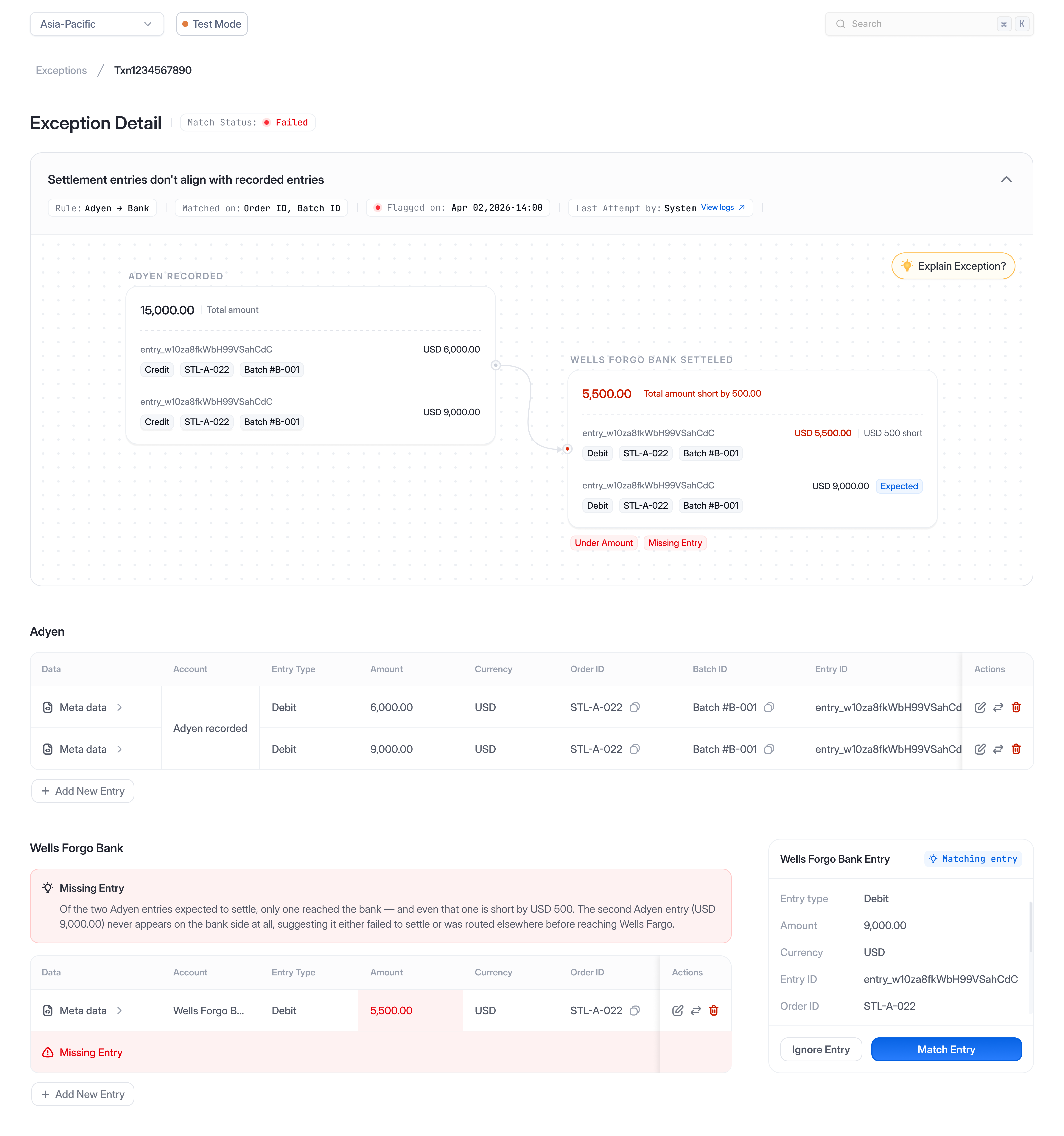
Transactions don't always map one-to-one. A single order can split into multiple settlement entries, while several orders can eventually settle into one bank record. That means two exceptions with the same mismatch reason can have entirely different structures underneath.
Before they can act, analysts first need to reconstruct how those accounts and entries relate to one another.
One-to-one
One order matches one settlement entry. The simplest and most common case.
One-to-many
One order splits into multiple settlement entries, such as capture, fee, and refund.
Many-to-one
Multiple orders settle into a single bank entry, usually through batching.
Many-to-many
Groups of orders reconcile against groups of bank entries, with no fixed pairing.
The exception label tells you what failed, but not how the records relate underneath.
Analysts need to understand both layers before they can act:
- Who is being compared (Account level)
- What is being compared underneath (Entry level)
Account level
Shows who is being compared.
Entry level
Shows what is being compared underneath.
Why resolution slows down
- The exception label hides the structure beneath it.
- The same mismatch can require entirely different resolutions.